Driving in Norway is the easiest difficult-looking thing you'll do all year: courteous traffic, immaculate roads, and a landscape that makes every wrong turn a bonus. The complexity hides in the billing — tolls, ferries, fuel — and in a few rules with real teeth. Here's everything, from rental desk to hairpin.
Renting: the three decisions
- Automatic vs manual: automatics cost more and sell out first in summer — book early if you need one. (Most of the fleet is going automatic anyway as EVs take over.)
- EV or petrol: Norway is the world's EV laboratory — over 90% of new cars sold are electric, chargers blanket the country, and EV rentals often price competitively while dodging fuel costs (fast-charging still costs real money; overnight destination charging is the win). Range anxiety is a non-issue on main corridors; plan charging only for the remotest legs.
- Size: smaller is better. Fjord-road passing places, village parking and ferry pricing all reward the compact.
The real costs (budget these, not just the rental)
- Tolls: ubiquitous and automatic — cameras read your plate, the rental company bills your card later (sometimes weeks later; don't panic at the surprise charge). City rings, tunnels and some scenic roads all toll. Ballpark 50–150 NOK per touring day.
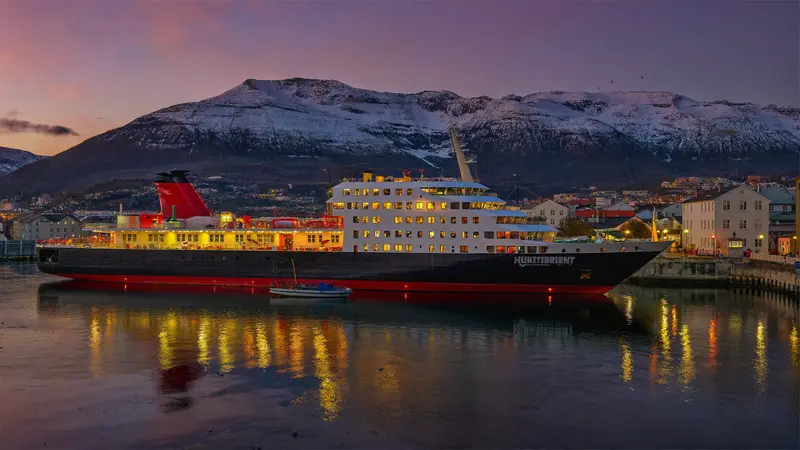
- Ferries: part of the road network on the west coast; car + driver typically lands in the 150–400 NOK range per crossing, auto-billed similarly on most routes. They're also the best coffee breaks in Norway.
- Fuel: among Europe's priciest; prices swing through the week (typically cheapest Sunday–Monday). EVs sidestep this line entirely.
- Parking: app-based (EasyPark rules the market), expensive in cities, free at most trailheads outside the icons.
Rules with teeth
- Speed: limits are low (80 km/h rural default, 100–110 on the best motorways) and enforced by average-speed camera pairs that do math you can't argue with. Fines are among the world's highest and income-linked for residents; rentals get billed. Just… drive the limit; everyone does.
- Alcohol: the limit is 0.02% — effectively zero. One beer is over. Norway means this one.
- Lights on always (daytime running lights mandatory), headlights dipped for oncoming traffic in tunnels, and give way to the right in unmarked junctions.
- Winter: winter tyres are mandatory in season (rentals come correctly shod), but winter competence is your own responsibility — if the forecast says mountain-pass storm, the pass closes or convoys; obey the gates.
The drives worth building days around
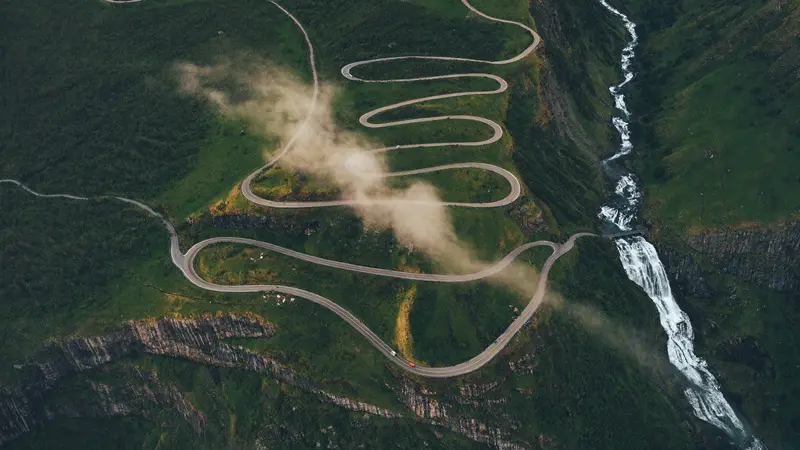
- Trollstigen — the eleven hairpins (seasonal, roughly late May–October; check status). Go early morning to have the bends to yourself.
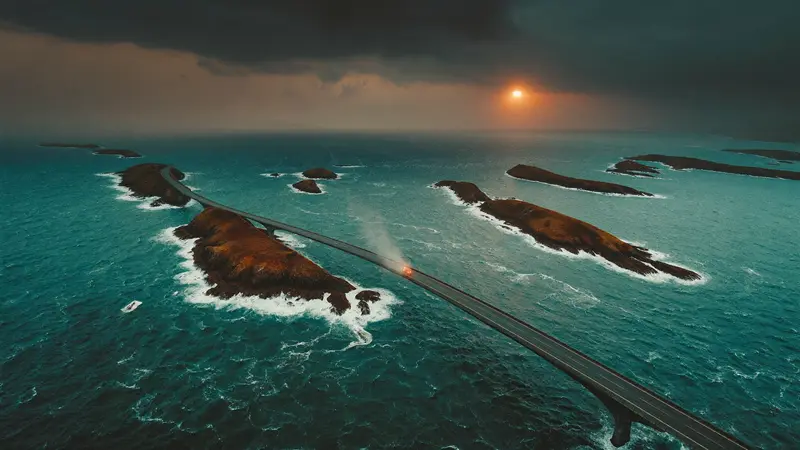
- The Atlantic Ocean Road — eight km of wave-dodging causeways; storm-weather drama is the premium version.
- Gamle Strynefjellsvegen & the Geiranger approaches — hand-built stone-edged mountain roads through snow canyons into fjord country.
- Aurlandsvegen "Snow Road" — over the top from Aurland to Lærdal past Stegastein; the summer-only high route parallels the world's longest road tunnel below.
- Lofoten's E10 — the whole archipelago threaded on one road; every pull-out is a postcard.
Eighteen routes carry official National Scenic Route status with architect-designed viewpoints — when route-planning, prefer them over the fastest line; that's the whole point of having the car.
Fjord-road technique
- Passing places (M signs) — on single-track roads, the car nearest a passing bay reverses to it. Locals do this cheerfully at speed; match the cheer, not the speed.
- Tunnels — Norway has 1,000+, including roundabouts inside mountains and the 24.5 km Lærdal tunnel. Sunglasses off, lights check, and mind the sheep at rural exits.
- Photo discipline: never stop in the carriageway for a view — the next pull-out is always ≤2 minutes away and legal.
- Wildlife: moose and deer at dusk are the real hazard statistic; the warning signs mean it.
Worth having in the car
As an Amazon Associate, Ritzyme earns from qualifying purchases — at no extra cost to you. We only list gear we’d pack ourselves.
Prefer to let someone else drive?
From Ålesund: Trollstigen, Village & Fjord Tour
The eleven hairpins of Trollstigen plus fjord and village stops — Norway's greatest mountain road without the rental car.
Geiranger: Flydalsjuvet & Eagle Bend Viewpoint Trip
Hit the two definitive Geiranger viewpoints — Flydalsjuvet and the Eagle Bend hairpin — without driving the passes yourself.
Private Hardangerfjord Roundtrip with Cruise
A private full-day trip from Bergen through orchard country to the Hardangerfjord — Norway's 'queen of the fjords' — with a scenic cruise included.
Heads up: booking through the links above supports Ritzyme at no extra cost to you. Prices and availability are set by the provider — always confirm details on the booking page.
Car or no car?
Cities + classic fjord loop = no car (the public network does it better). Geiranger–Ålesund–Atlantic Road corridor, Lofoten, or any itinerary chasing trailheads = car, unambiguously. Many of the best trips split the difference: rail into fjord country, rent for the road-trip leg only — the pattern our 10-day itinerary uses. And if driving isn't your thing at all, guided minivan tours cover Trollstigen and Geiranger from Åndalsnes all summer.
Frequently asked questions
Is driving in Norway difficult?
No — roads are excellent, traffic is calm and courteous, and even mountain hairpins are well-engineered. The learning curve is administrative: automatic tolls, ferry timetables and strict speed enforcement.
How much do tolls and ferries cost in Norway?
Budget roughly 50–150 NOK per touring day in tolls and 150–400 NOK per car-ferry crossing, all billed automatically via your rental's plate — sometimes weeks later.
When is Trollstigen open?
Roughly late May to October, snow depending — the pass closes entirely in winter. Check the national road authority's status before building a day around it.
Should I rent an EV in Norway?
It's the natural choice — charging infrastructure is the world's densest, EVs often rent competitively, and you skip Europe's priciest petrol. Plan fast-charge stops only for the remotest legs.
Ritzyme is reader-supported. Some links in this guide are affiliate links (marked as sponsored) — if you book through them we may earn a small commission at no extra cost to you. We only recommend experiences we’d take ourselves, and commissions never change our rankings.