Norway's trail network runs from pram-friendly forest loops to exposed ridgelines that demand respect and daylight math. The country will happily let you attempt any of them — the filtering is your job. Here's the ladder, rung by rung, with the season windows and honesty about effort that trail brochures omit.
Ground rules first (Norway edition)
- The mountain code (fjellvettreglene) is cultural scripture: check weather and conditions, tell someone your route, carry layers regardless of forecast, and — the famous one — there is no shame in turning around.
- Season windows are real: high trails hold snow into June and reclaim it by October. "Closed" in Norway usually means "you and your cotton hoodie will become a rescue statistic."
- Marking system: red T's on cairns mark DNT (trekking association) routes; ut.no is the national trail bible with conditions and times.
- Right to roam means you can walk almost anywhere — with leave-no-trace obligations attached.
Level 1 — Everyone, in trainers
Fløyen plateau walks, Bergen
Funicular up, then lakes, troll forest and gravel loops with the city below. All-season, all-weather, all-ages — details in the Bergen top-8.
Flåm valley & Otternes
An hour of fjord-side lanes past goat farms to a 17th-century hamlet. Pairs with the railway day perfectly.
Lofoten's Haukland–Uttakleiv coastal path
A flat 40-minute headland walk between two of Europe's most beautiful beaches. Arctic paradise, zero suffering.
Level 2 — Fit-ish, half a day
Stoltzekleiven + Sandviksfjellet, Bergen
800 stone steps straight up; burning legs, twenty minutes, glorious harbour panorama. The city's favourite workout.
Reinebringen, Lofoten
Sherpa-built stone stairs (~1,500 of them) to the Lofoten view: Reine's turquoise lagoons and spires below. Short but relentless; go early or late to dodge both crowds and midday haze. June–September.
Dalsnibba & Geiranger valley trails
Viewpoint-to-viewpoint walking above the great fjord, with bus/boat combinations doing the heavy lifting — see the Geiranger guide.
Level 3 — The famous epics (train for these)
Preikestolen (Pulpit Rock)
The 604-metre cliff platform over Lysefjord. 8 km round trip, 2–4 hours, stone-stair engineered most of the way — the most achievable of the icons, hence the crowds. April–October core season; sunrise starts beat the queues.
Trolltunga
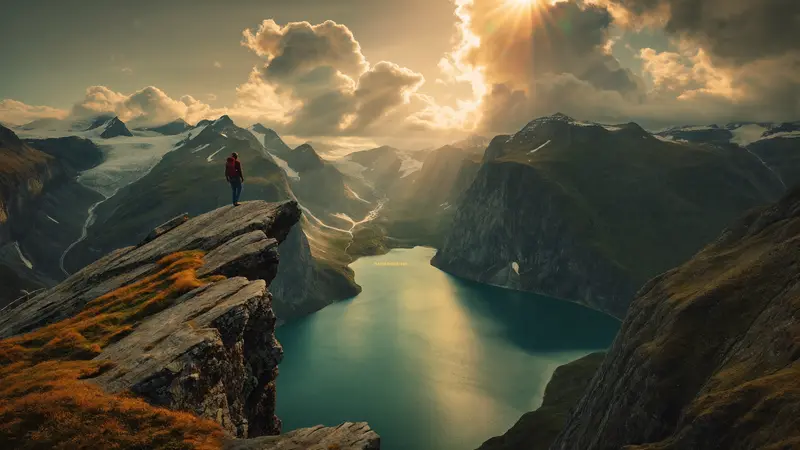
The tongue of rock over Ringedalsvatnet: roughly 20 km round trip, 800+ m of ascent, 7–12 hours. Mid-June–mid-September window, weather turns fast at 1,100 m, and the photo queue at the ledge is real in July. Guided options exist year-round for the experienced. This is a mountain day, not a photo stop — but it's worth every kilometre.
Romsdalseggen ridge
Åndalsnes's crown: an exposed traverse with the Troll Wall across the valley. The connoisseur's choice over the more famous two — bus to trailhead, 10 km back to town, knees required.
Besseggen, Jotunheimen
The national classic: the ridge between emerald Gjende and navy Bessvatnet, ~14 km with boat access. July–September. Norwegians consider it a rite of passage; join them.
Gear honesty
You don't need expedition kit for Level 1–2 — you need waterproofs, wool, and real soles. For Level 3: add proper boots, map/app redundancy, headlamp, and calories you don't plan to eat. The complete list by season is in the packing guide. Cotton, as the DNT says, stays home.
Boots, poles and traction
As an Amazon Associate, Ritzyme earns from qualifying purchases — at no extra cost to you. We only list gear we’d pack ourselves.
Book a guided hike
Stavanger: Preikestolen Hike with a Local Guide
Hike Pulpit Rock with a local guide handling the transport, timing and pacing — ideal if it's your first Norwegian mountain.
Odda: Trolltunga Via Ferrata & Sky Ladder
Reach the Troll's Tongue the spectacular way — a full-day via ferrata with a sky ladder up the cliff face, harnessed and guided.
Odda: Overnight Hike to Trolltunga
Split the 20 km epic over two days and camp near the ledge — sunset and sunrise on Trolltunga with almost nobody around.
Preikestolen: The Wild Hike
A guided route to Pulpit Rock away from the main trail — more solitude, more wilderness, the same spectacular ledge.
Heads up: booking through the links above supports Ritzyme at no extra cost to you. Prices and availability are set by the provider — always confirm details on the booking page.
The hut system — Norway's best-kept walking secret
The DNT's 550+ mountain cabins — staffed lodges to unlocked huts on trust-based payment — turn multi-day routes into achievable itineraries without camping gear. Membership pays for itself in two nights; the trust-hut experience (log your stay, leave payment, split wood for the next walker) explains half of Norwegian civic culture in one evening. Budget details in the budget accommodation guide.
Frequently asked questions
What is the most famous hike in Norway?
Trolltunga (the troll's tongue rock ledge), Preikestolen (Pulpit Rock) and Besseggen ridge are the big three. Preikestolen is the most achievable; Trolltunga is a serious full mountain day.
When is hiking season in Norway?
Lowland and city trails run year-round, but the famous high trails hold snow until mid-June and reclaim it by October. July–September is the safe window for Trolltunga-tier hikes.
Can beginners hike in Norway?
Absolutely — the trail ladder starts with plateau walks above Bergen and fjord-side paths in Flåm and Lofoten. The DNT marking system and hut network make progression natural.
What are DNT huts?
The Norwegian Trekking Association's 550+ mountain cabins — staffed lodges, self-service huts with stocked pantries, and unlocked trust-based huts. Membership pays for itself in about two nights.
Ritzyme is reader-supported. Some links in this guide are affiliate links (marked as sponsored) — if you book through them we may earn a small commission at no extra cost to you. We only recommend experiences we’d take ourselves, and commissions never change our rankings.