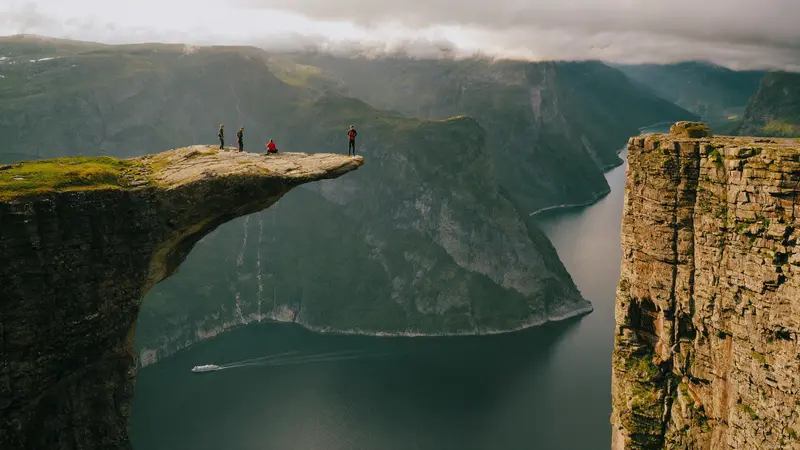
Stavanger is having a moment. Norway's fourth-largest city — the country's oil capital on the southwest coast — has quietly become one of its most rewarding urban breaks: a walkable old town of white wooden houses, a genuinely good food scene, colourful street art, and, on its doorstep, the trailheads for Preikestolen and Kjerag above the Lysefjord. It's the ideal base for southern fjord country. Here's what to do in Stavanger and how to use it.
Why visit Stavanger?
Because it combines an easy, characterful city with instant access to two of Norway's most famous hikes and a spectacular fjord — a rare one-base combination. It's smaller and calmer than Bergen or Oslo, reachable by air, rail and the coastal ferry network, and increasingly popular as travellers spread beyond the classic Bergen–fjords corridor. As a summer destination for 2026, it's firmly on the rise.
The best things to do in Stavanger
- Gamle Stavanger — the old town's 170+ white wooden cottages along cobbled lanes; Northern Europe's best-preserved wooden settlement.
- Fargegaten (Øvre Holmegate) — the famously colourful café street, great for people-watching and coffee.
- Norwegian Petroleum Museum — far more interesting than it sounds; the story of the oil that made modern Norway rich.
- Street art — Stavanger's Nuart festival has left world-class murals across the centre.
- Sardine and food heritage — the Canning Museum, plus a dining scene punching well above the city's size.
- Swim or sauna — harbour saunas and nearby beaches for the Nordic cold-plunge ritual.
The main event: the Lysefjord, Preikestolen and Kjerag
Stavanger's real superpower is what lies just east of it. The Lysefjord — a narrow 42-km slash of a fjord — is ringed by Norway's headline cliffs:
- Preikestolen (Pulpit Rock) — a 604 m cliff and the most achievable of Norway's iconic hikes; a day trip from the city. Full details in our Preikestolen guide.
- Kjerag — the boulder wedged in a chasm 1,000 m above the fjord; a tougher, higher day out.
- Lysefjord cruise — sail beneath both cliffs to feel the scale; the perfect non-hiking (or rest-day) option.
These pair beautifully with the wider Norway fjord tours picture.
Base here, hike smart. Sleep in Stavanger, take the early seasonal shuttle bus to the Preikestolen trailhead, hike at first light to beat the crowds, and be back for dinner in the old town. It's the most efficient way to bag Pulpit Rock without a car.
Best time to visit Stavanger
| Season | Why |
|---|---|
| Jun–Aug | Warmest, long days, all hikes and cruises running — peak season |
| May & Sep | Shoulder sweet spot: hikeable, quieter, better value |
| Oct–Apr | Mild coastal city breaks; Preikestolen becomes a winter/guided hike only |
The southwest coast is milder but wet — pack for it with our packing guide.
Where to stay and how long to spend
Stay in or near the city centre / harbour for walkability to the old town, restaurants and the ferry quays. Two to three days is ideal: one for the city, one for Preikestolen or a Lysefjord cruise, and a spare for Kjerag or a food-and-museums day. It slots naturally into a southern loop or a wider Norway itinerary.
Getting to Stavanger
Fly into Stavanger (Sola) from across Europe, take the scenic train from Oslo via the Sørlandet line, or arrive by coastal express boat and ferry from Bergen. Once there it's a compact, walkable city — see our transport guide for connections.
Book Lysefjord cruises & Preikestolen hikes
Stavanger: Electric Fjord Cruise to Lysefjord & Preikestolen
Sail silently beneath Pulpit Rock on an electric boat — the best way to grasp the scale of the 604 m cliff from below.
Stavanger: Preikestolen Hike with a Local Guide
Hike Pulpit Rock with a local guide handling the transport, timing and pacing — ideal if it's your first Norwegian mountain.
Stavanger: Fjord Cruise to Lysefjord & Pulpit Rock
A classic sightseeing cruise up the Lysefjord past waterfalls and goat cliffs to the foot of Preikestolen.
Preikestolen: The Wild Hike
A guided route to Pulpit Rock away from the main trail — more solitude, more wilderness, the same spectacular ledge.
Heads up: booking through the links above supports Ritzyme at no extra cost to you. Prices and availability are set by the provider — always confirm details on the booking page.
Bergen gets the fame, but Stavanger quietly offers the same formula — a lovable small city wrapped around a world-class fjord — with fewer crowds and Norway's most famous cliff on its doorstep.
Frequently asked questions
Is Stavanger worth visiting?
Yes — it pairs an easy, walkable old town, a strong food scene and world-class street art with instant access to Preikestolen, Kjerag and the Lysefjord. It's a calmer, less crowded alternative to Bergen with a famous cliff on its doorstep.
How many days do you need in Stavanger?
Two to three days: one for the city (Gamle Stavanger, Fargegaten, museums and food), one for Preikestolen or a Lysefjord cruise, and a spare for Kjerag or a relaxed food-and-sauna day.
Can you visit Preikestolen from Stavanger?
Yes — Preikestolen (Pulpit Rock) is a day trip from Stavanger. Seasonal shuttle buses run from the city and cruise port to the trailhead, about 40 minutes away, making it easy to hike without a car.
What is Stavanger famous for?
Its preserved white wooden old town (Gamle Stavanger), the colourful Fargegaten café street, the Nuart street-art festival, the Norwegian Petroleum Museum, and being the gateway to the Lysefjord's cliffs — Preikestolen and Kjerag.
Ritzyme is reader-supported. Some links in this guide are affiliate links (marked as sponsored) — if you book through them we may earn a small commission at no extra cost to you. We only recommend experiences we’d take ourselves, and commissions never change our rankings.