Norway's fjord season is brutally short — the bulk of the year's visitors arrive inside roughly six weeks of high summer, and they all go to the same five places at the same time of day. The result is a dream trip that feels like a theme park: full car parks in Lofoten, queues for the photo at Trolltunga, and a Bryggen you can barely walk through. The good news is that crowding in Norway is extremely predictable, which means it's avoidable. Here's the system.
Rule 1: the two-hour rule beats everything
If you remember one thing, make it this. Crowds at Norway's famous viewpoints are driven by coach and cruise schedules, not by tourists in general — and those run to a timetable.
- Before 09:00 or after 18:00 at any famous viewpoint, and you will often have it near-empty.
- 10:00–15:00 is the crush window everywhere: Geiranger viewpoints, Bryggen, Flåm, Preikestolen's ledge.
In high summer you have 18+ hours of usable light — and near the Arctic Circle, 24. There is no reason to sightsee at noon. Shift your whole day two hours earlier than feels natural and you travel through a different, emptier country.
Rule 2: check the cruise calendar before you fix your dates
Bergen, Geiranger, Flåm and Ålesund publish their cruise-ship arrival schedules in advance. A three-ship day and a no-ship day in the same week are completely different towns. Look it up, then either dodge the heavy days in town — or use them as your day-trip days and leave entirely. Our 3-day Bergen itinerary is built around exactly this.
Rule 3: move one month, not one hour
The strongest lever of all. Late May to mid-June and late August to mid-September give you:
- Most of the same access — boats, trains and most mountain roads are running.
- Dramatically fewer people, because the school-holiday and cruise peak has not started or has ended.
- Lower prices on almost everything.
- In late May–June, more waterfall from snowmelt; in September, autumn colour.
You give up a little warmth and, in September, some daylight. Almost everyone who tries shoulder season prefers it. See when Norway is cheapest and the month-by-month guide.
Rule 4: go one valley further
Norway's crowding is concentrated in about five places that Instagram made famous. The country has hundreds of fjords. Swap deliberately:
| Instead of… | Try… | What you get |
|---|---|---|
| Lofoten | Senja | Same Arctic peaks and beaches, a fraction of the traffic |
| Geiranger | Hardangerfjord | Orchards, waterfalls, far fewer coaches |
| Trolltunga | Preikestolen at sunrise, or Kjerag | Iconic cliffs without the 20 km queue |
| A Bergen package tour | The Gudvangen cruise | The same UNESCO fjord, direct and cheaper |
| Peak-hour Flåm | Rosendal or the Osterfjord | Fjord scenery with almost nobody |
More options in our day trips from Bergen guide.
The cheapest crowd hack in Norway: take the first departure of the day on any fjord cruise. Packaged tours coming out of Bergen and Oslo physically cannot reach the fjords before mid-morning, so the early boat carries independent travellers and locals. Identical scenery, half the people, better light.
What actually changed for 2026
Two changes cause a lot of confusion. Here's the accurate version.
Zero-emission rules in the World Heritage fjords
Norway has adopted zero-emission requirements for passenger ships in the five World Heritage fjords — Nærøyfjorden, Aurlandsfjorden, Geirangerfjorden, Sunnylvsfjorden and Tafjorden. The timeline:
- From 1 January 2026: applies to passenger ships under 10,000 gross tonnage — the smaller tourist boats and ferries.
- From 1 January 2032: applies to ships of 10,000 GT and above — the large cruise ships.
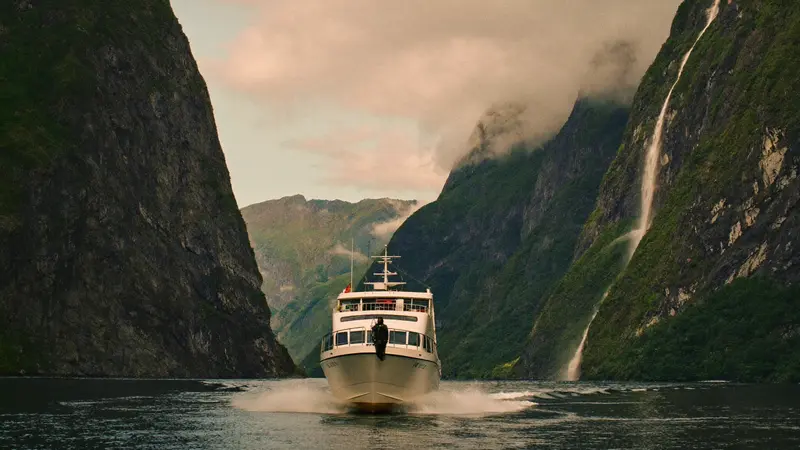
So, contrary to a lot of headlines, large cruise ships are not banned from the fjords in 2026. What has changed is that the small boats you actually ride through the Nærøyfjord are now electric — which is why those cruises are so startlingly quiet. Biogas is permitted as a transitional fuel in some cases before 2032, and ships must use shore power where it exists.
The visitor tax
Separately, Norway is phasing in a tourist tax of up to 3% on overnight stays in municipalities that opt in, with Lofoten among the first. It's a few dollars a night, and campervans and tents are exempt. Full detail in our tourist tax guide.
Hotspot-by-hotspot cheat sheet
- Bryggen, Bergen: before 10:00 or after 16:00. Walk the back alleys, not the harbour façade.
- Geiranger viewpoints: Dalsnibba and Ørnesvingen early morning; the fjord itself is fine any time from the water.
- Preikestolen: start at sunrise. You'll meet the crowd on your way down.
- Trolltunga: start by 07:00 at the latest, or do the overnight version and have it at dawn.
- Flåm: take the first or last railway departure; midday is package-tour convergence.
- Lofoten: shoulder season, and use designated parking — the car parks are the real bottleneck.
Book the quieter alternatives
The Flåm Railway & the Nærøyfjord Tour
Norway's two greatest hits in one booking — the steep Flåm Railway and a cruise through the UNESCO-listed Nærøyfjord.
From Tromsø: Senja Discovery Day Trip with Lunch
A full day discovering Senja's peaks, beaches and coastline with lunch included — the easiest way to see the island without renting a car.
From Bergen: The Original Mostraumen Fjord Cruise
The classic 3-hour cruise from Bergen harbour into the narrow Mostraumen strait, under waterfalls — running year-round.
Private Hardangerfjord Roundtrip with Cruise
A private full-day trip from Bergen through orchard country to the Hardangerfjord — Norway's 'queen of the fjords' — with a scenic cruise included.
Heads up: booking through the links above supports Ritzyme at no extra cost to you. Prices and availability are set by the provider — always confirm details on the booking page.
The bottom line
Norway isn't full — it's concentrated. Five places, six weeks, five hours a day. Break any one of those three and the country opens up. Move your clock two hours, move your month by four weeks, or move one valley over, and the fjord you were promised is still there, quietly waiting.
Frequently asked questions
How do you avoid crowds in Norway's fjords?
Shift your day two hours earlier: visit famous viewpoints before 09:00 or after 18:00, since crowding follows coach and cruise timetables that cluster between 10:00 and 15:00. Beyond that, travel in shoulder season and choose alternatives like Senja over Lofoten or Hardanger over Geiranger.
Are cruise ships banned from Norway's fjords in 2026?
No. Norway adopted zero-emission requirements for the five World Heritage fjords, but they apply to passenger ships under 10,000 gross tonnage from 1 January 2026 and to larger ships only from 1 January 2032. In practice the small tourist boats are now electric; large cruise ships still sail.
Which Norwegian fjords are least crowded?
Hardangerfjord is far quieter than Geiranger for comparable scenery, the Osterfjord and Rosendal area see few tour groups, and in the north Senja offers Lofoten-style peaks and beaches with a fraction of the traffic. The Gudvangen–Flåm cruise is also quieter than packaged Bergen tours.
When is the least crowded time to visit Norway?
Late May to mid-June and late August to mid-September. Both give you most of the summer access — boats, trains and mountain roads running — with far fewer people and lower prices. Late May and June also bring the strongest waterfalls of the year from snowmelt.
Ritzyme is reader-supported. Some links in this guide are affiliate links (marked as sponsored) — if you book through them we may earn a small commission at no extra cost to you. We only recommend experiences we’d take ourselves, and commissions never change our rankings.