Winter might be the best-value, most magical time to visit Norway — if you know how to do it. This is the season of the northern lights, dog-sledding across frozen plateaus, snow-dusted fjords with no crowds, and cosy cabins under star-filled skies. It's also the season that punishes the unprepared with icy roads, short daylight and serious cold. Here's the complete guide to a Norway winter trip: where to go, what to do, and how to stay warm and safe.
Why visit Norway in winter?
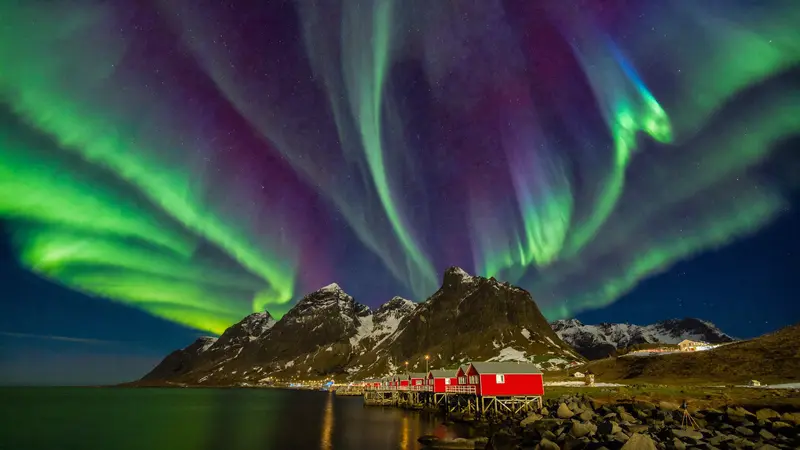
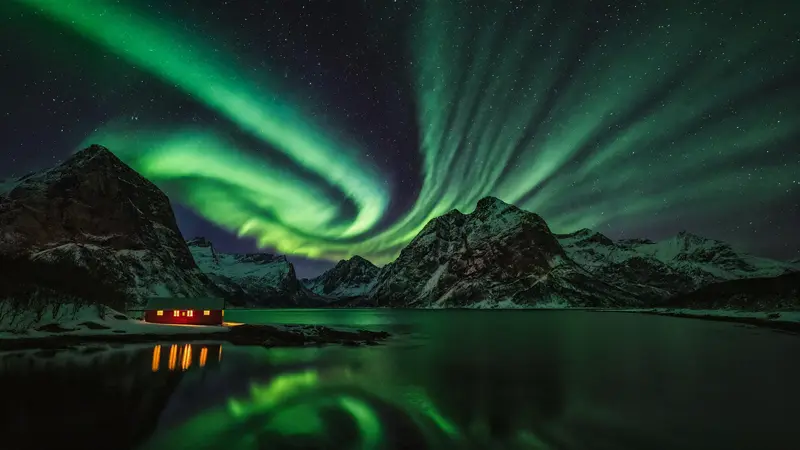
Because it delivers experiences no other season can: the aurora dancing over the fjords, husky and reindeer sledding, snow-covered fairy-tale towns, and — crucially — far fewer tourists and lower prices outside the Christmas and February half-term peaks. The 2026–27 aurora seasons remain strong in the window following the recent solar maximum, so it's a great time to chase the lights.
Where to go in Norway in winter
- Tromsø — the Arctic capital and the #1 aurora base; whale watching, dog sledding, a lively city.
- Lofoten — dramatic winter light, aurora over the peaks, milder than you'd think thanks to the Gulf Stream.
- Bergen & the fjords — snow-capped fjord scenery with mild coastal temperatures; the Flåm Railway is magical in snow.
- Oslo — museums, Christmas markets, ski trails from the metro, and the Holmenkollen jump.
- Finnmark & the Sámi north — the deep-freeze interior for sledding, ice hotels and reindeer culture.
The best winter activities
- Chase the northern lights — by minibus, boat, or on a dedicated camp night.
- Dog sledding & reindeer sledding — the classic Arctic experience, with Sámi guides.
- Snowmobiling across frozen plateaus.
- Whale watching — orcas and humpbacks off the north coast in early winter.
- Skiing — cross-country is the national religion; downhill resorts near Oslo and beyond.
- Sleep somewhere wild — a glass aurora cabin or ice hotel.
How cold does it get? (It depends where)
| Region | Typical winter day | Character |
|---|---|---|
| Coast (Bergen, Lofoten) | 0 to –5°C | Milder, wetter, snowier lows; Gulf Stream effect |
| Oslo & inland south | –3 to –10°C | Colder, drier, reliable snow |
| Arctic interior (Finnmark) | –15 to –30°C | Deep freeze — proper Arctic cold |
The coast is far milder than most people expect; the interior is where the serious cold lives. Note daylight is short — a few hours in the south, and full polar night (no sunrise) in the far north from roughly late November to mid-January.
Layer like a Norwegian: "ull" (wool) is king. A merino base layer, a warm mid-layer, and a windproof/waterproof shell, plus proper insulated boots, hat and gloves, will keep you comfortable anywhere. Cotton is the enemy. Our packing guide has the full winter list.
The Norwegian winter layering kit
As an Amazon Associate, Ritzyme earns from qualifying purchases — at no extra cost to you. We only list gear we’d pack ourselves.
Winter driving & getting around
Winter driving in Norway is very doable but demands respect: rental cars come on winter tyres, but roads are icy, some mountain passes close entirely, and daylight is limited. Many visitors skip the car and rely on the excellent trains (the Bergen and Flåm railways are spectacular in snow), buses, flights and the Hurtigruten coastal voyage. If you do drive, read our driving guide first and build in extra time.
When exactly to go
- Late Sep–Oct: first auroras, autumn colour, snow arriving up north — shoulder value.
- Nov–Mar: the core winter/aurora season; darkest skies, best sledding and snow.
- Avoid peaks for value: Christmas/New Year and February half-term are priciest and busiest.
Cross-reference dates with our month-by-month guide and, for the lights specifically, the northern lights guide.
Book Norway's winter experiences
Tromsø: Northern Lights Chase by Minibus
A guided minibus hunt that drives as far as it takes to find clear skies — with free photos of you under the aurora included.
Tromsø: Self-Drive Husky Sledding Adventure
Take the reins of your own husky team through the Arctic forest — you drive, not just ride.
Tromsø: Reindeer Sledding, Dinner & Northern Lights
A Sámi camp day trip combining a reindeer sled ride, a traditional dinner by the fire and an aurora watch.
Tromsø: Winter Snowshoeing in the Wilderness
Strap on snowshoes and walk out into silent, untracked Arctic forest — the gentlest way into the winter wilderness, no experience needed.
From Tromsø: Snowmobile Safari in the Lyngen Alps
Ride a snowmobile across the frozen plateaus beneath the Lyngen Alps — the fastest way into Arctic Norway's white wilderness.
Tromsø: Whale Watching by Hybrid-Electric Boat
Near-silent hybrid-electric sailing to find orcas and humpbacks in the Arctic fjords — quieter for you and kinder to the whales.
Alta: Altafjord Whale Watching in a Heated Boat
Whale watching from a warm, heated boat on the Altafjord — the comfortable option when Arctic temperatures bite.
Heads up: booking through the links above supports Ritzyme at no extra cost to you. Prices and availability are set by the provider — always confirm details on the booking page.
Done right, winter is Norway at its most atmospheric and its most affordable — snow-hushed fjords, the aurora overhead, and a warm cabin waiting. Pack the wool and go.
Frequently asked questions
Is Norway worth visiting in winter?
Yes — winter brings the northern lights, dog sledding, snow-covered fjords and towns, and lower prices with far fewer tourists outside the Christmas and February peaks. The 2026–27 aurora seasons remain strong after the recent solar maximum.
How cold does Norway get in winter?
It depends where: the coast (Bergen, Lofoten) is mild at around 0 to –5°C thanks to the Gulf Stream; Oslo and the inland south sit around –3 to –10°C; and the Arctic interior of Finnmark can reach –15 to –30°C.
Where should you go in Norway in winter?
Tromsø as the top aurora base, Lofoten for dramatic winter light, Bergen and the fjords for snow-capped scenery with mild temperatures, Oslo for museums and city skiing, and Finnmark for deep-freeze sledding and ice hotels.
What should you pack for Norway in winter?
Layer like a Norwegian: a merino wool base layer, a warm mid-layer, and a windproof, waterproof shell, plus insulated boots, a hat and gloves. Avoid cotton. Add extra insulation for the Arctic interior.
Ritzyme is reader-supported. Some links in this guide are affiliate links (marked as sponsored) — if you book through them we may earn a small commission at no extra cost to you. We only recommend experiences we’d take ourselves, and commissions never change our rankings.