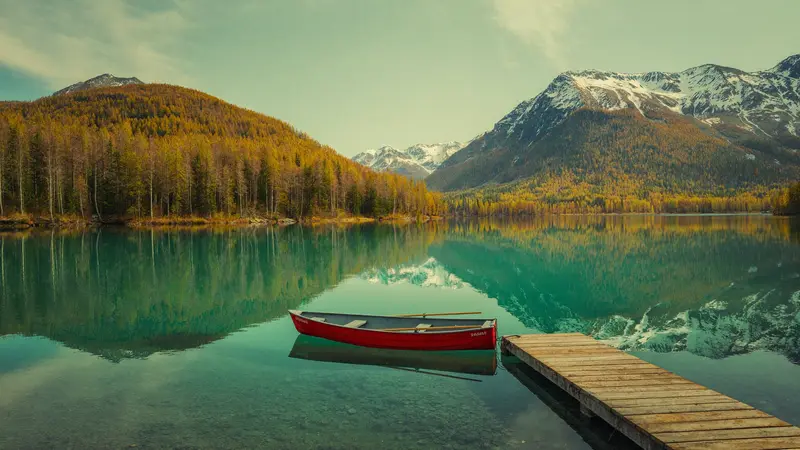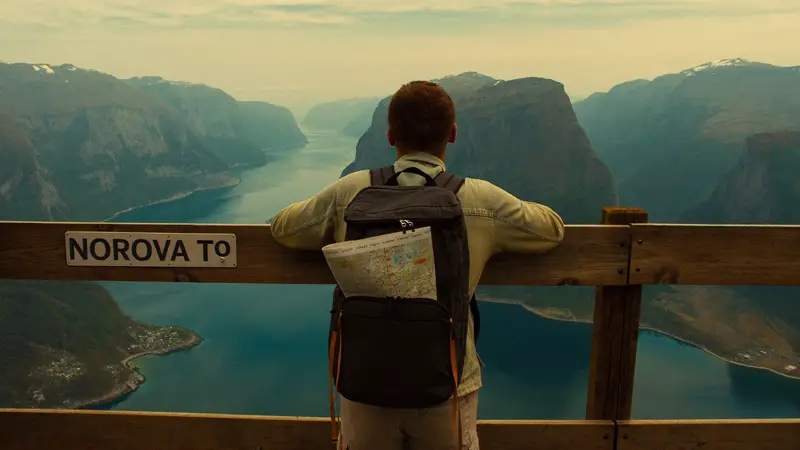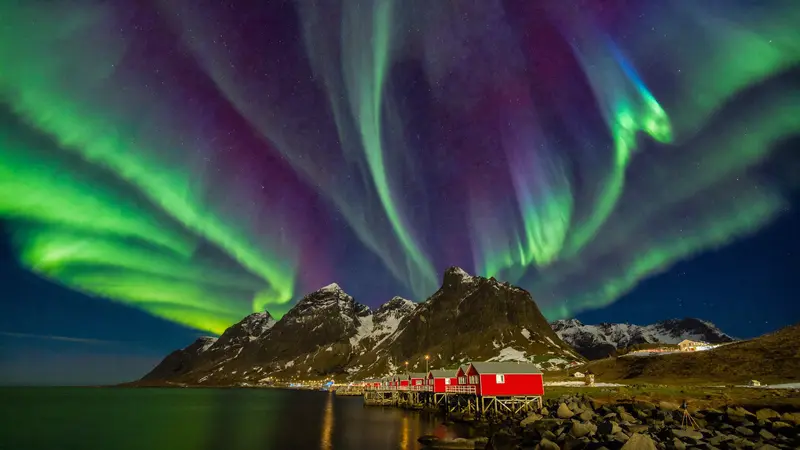
The Lofoten Islands are the photograph that made you want to visit Norway: jagged black peaks rising straight from a turquoise sea, red fishermen's cabins on stilts, and beaches that look Caribbean until you touch the water. This Arctic archipelago — a two-hour flight north of the Arctic Circle — delivers the midnight sun in summer and the northern lights in winter, and it has become one of Norway's most sought-after destinations. Here's how to plan a Lofoten trip that lives up to the pictures, and how to do it without adding to the crowds.
Where are the Lofoten Islands?
Lofoten is a chain of islands off Norway's northwest coast, well above the Arctic Circle at around 68°N, linked to the mainland and to each other by bridges, tunnels and short ferries. Despite the latitude, the Gulf Stream keeps winters far milder than you'd expect. The main road, the E10, threads the whole archipelago from Fiskebøl in the north to the village of Å at the very tip — making Lofoten one of the great scenic drives on earth.
How to get to Lofoten
- Fly to Svolvær or Leknes (via Bodø or Tromsø) — fastest, and the small-plane approach is spectacular.
- Ferry from Bodø to Moskenes — a scenic 3–4 hour crossing, ideal if you're bringing a car.
- Drive the E10 from the mainland if you're on a bigger Norway road trip — it connects near Narvik.
- Hurtigruten coastal ships call at Svolvær and Stamsund — see our coastal voyage guide.
A rental car is close to essential once you arrive — the best beaches, viewpoints and trailheads are strung along the E10 and its side roads.
The best things to do in Lofoten
- Reine and Hamnøy — the postcard villages; Hamnøy's rorbu-and-peak view is arguably Norway's most photographed.
- Haukland and Uttakleiv beaches — white sand, dramatic peaks, and a stunning coastal walk between them.
- Hike Reinebringen — a Sherpa-built stone stairway to the definitive Lofoten panorama over Reine (steep but short).
- Å and the Lofoten fishing heritage — the road's-end village and its stockfish museums.
- Henningsvær — a gallery-filled fishing village with the famous football pitch ringed by sea.
- Kayak or RIB the fjords among the sea eagles — Lofoten's answer to the fjord adventure menu.
Lofoten-specific kit
As an Amazon Associate, Ritzyme earns from qualifying purchases — at no extra cost to you. We only list gear we’d pack ourselves.
Best time to visit Lofoten
| Season | What you get | Watch for |
|---|---|---|
| Jun–Jul | Midnight sun 24/7, warmest hiking, all roads open | Peak crowds & prices; book months ahead |
| Late Aug–Sep | Quieter, autumn colour, first auroras, still hikeable | Cooler, shorter days |
| Sep–Mar | Northern lights over the peaks, dramatic light | Icy roads, limited daylight, some closures |
| Apr–May | Snow-capped peaks, green valleys, low crowds | Cold sea, variable weather |
For the aurora specifically, pair this with our complete northern lights guide; for endless summer light, the midnight sun guide.
Where to stay in Lofoten
The iconic choice is a rorbu — a converted red fishermen's cabin on the water, often in Reine, Hamnøy, Sakrisøy or Å. They're magical and they sell out first, so book as far ahead as you can. Svolvær and Leknes offer more conventional hotels and better transport links. See our unique stays guide for the rorbu experience, and note that Lofoten is a pilot area for Norway's new tourist tax.
Where to stay in Lofoten — rorbu cabins & hotels
Eliassen Rorbuer, Hamnøy (Moskenes)
The red cabins on stilts you've seen in every Lofoten photograph — sleeping in the postcard itself, right on the water at Hamnøy.
Svinøya Rorbuer, Svolvær
Historic fishermen's cabins on their own islet beside Svolvær — heritage rorbu character with the town a short walk away.
Rorbuene Svolvær Havn
Harbour-front rorbu cabins in the middle of Svolvær — the most convenient base for Trollfjord cruises and Lofoten day trips.
Thon Hotel Lofoten, Svolvær
A modern full-service hotel on Svolvær's waterfront — reliable comfort, big breakfast and fjord views when a cabin isn't your thing.
Fast Hotel Lofoten, Svolvær
A straightforward, better-value Svolvær base — a smart pick when Lofoten's peak-season prices start to bite.
Heads up: booking through the links above supports Ritzyme at no extra cost to you. Prices and availability are set by the provider — always confirm details on the booking page.
Travel-well tip: Lofoten is straining under its own popularity. Stick to marked trails and designated parking, never camp on private farmland without asking, pack out everything, and consider shoulder season. If you want the same Arctic drama with a fraction of the footfall, Senja is the answer.
A perfect 3–4 day Lofoten itinerary
- Day 1: Arrive Svolvær/Leknes, drive to a Reine-area rorbu, evening stroll in Hamnøy.
- Day 2: Hike Reinebringen at first light, afternoon in Å, sunset at Sakrisøy.
- Day 3: Haukland–Uttakleiv beach walk, Henningsvær galleries and harbour.
- Day 4: Sea-eagle RIB or kayak; in winter, an evening aurora chase.
Book a Lofoten experience
Lofoten: Trollfjord Cruise by Silent Electric Ship
Glide into the impossibly narrow Trollfjord on a silent electric ship — sea eagles overhead and 1,000 m walls on either side.
Lofoten: Midnight Sun Kayak Tour
Paddle a mirror-calm Arctic sea at midnight while the sun hangs above the horizon — the definitive midnight sun experience.
Tromsø: Whale Watching by Hybrid-Electric Boat
Near-silent hybrid-electric sailing to find orcas and humpbacks in the Arctic fjords — quieter for you and kinder to the whales.
Tromsø: Northern Lights Chase by Minibus
A guided minibus hunt that drives as far as it takes to find clear skies — with free photos of you under the aurora included.
Heads up: booking through the links above supports Ritzyme at no extra cost to you. Prices and availability are set by the provider — always confirm details on the booking page.
Lofoten is the centrepiece of Arctic Norway, but it's at its best as part of a wider northern loop — combine it with Tromsø and Senja for the full sweep of the far north.
Frequently asked questions
How many days do you need in Lofoten?
Three to four days covers the highlights — the Reine and Hamnøy area, a hike like Reinebringen, the Haukland–Uttakleiv beaches and Henningsvær. A week lets you slow down and reach the quieter corners.
What is the best time to visit the Lofoten Islands?
June–July for the midnight sun, warmest hiking and open roads (but peak crowds); late August–September for autumn colour, first auroras and fewer people; September–March for northern lights over the peaks. Book far ahead for summer.
How do you get to Lofoten?
Fly to Svolvær or Leknes via Bodø or Tromsø, take the scenic ferry from Bodø to Moskenes, drive the E10 from the mainland, or arrive on a Hurtigruten coastal ship. A rental car is close to essential once you're there.
Is Lofoten too crowded now?
It's under real pressure in peak summer — around a million visitors a year — which is why Norway is introducing a tourist tax there. Visit in shoulder season, stick to marked trails and parking, or choose the quieter island of Senja for a similar experience.
Ritzyme is reader-supported. Some links in this guide are affiliate links (marked as sponsored) — if you book through them we may earn a small commission at no extra cost to you. We only recommend experiences we’d take ourselves, and commissions never change our rankings.