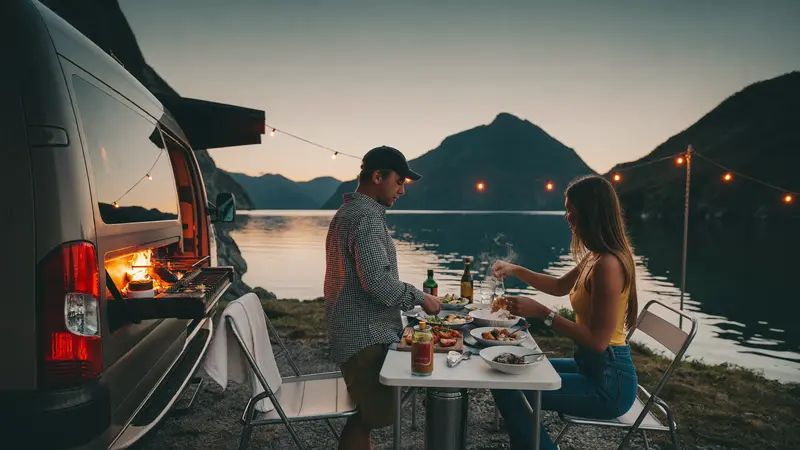
Norway gives you something almost no other country does: a legal right to walk across, and sleep on, open countryside that isn't yours. Allemannsretten — the right to roam — is written into law and is genuinely generous. It is also widely misunderstood by visitors, and the resulting mess (campervans on farmland, waste beside trails, blocked passing places) is precisely why Lofoten now hands out toilet bags and Norway is introducing a visitor tax. Here are the actual rules, and how to use them well.
What the right to roam actually allows
On utmark — uncultivated land, which covers most forest, mountain, moor and shoreline — you may:
- Walk, ski and cycle freely, regardless of who owns it.
- Pitch a tent and sleep for up to two nights in one spot.
- Swim, canoe and land a small boat.
- Pick berries, mushrooms and wildflowers for your own use.
It does not apply to innmark — cultivated land: fields, meadows, gardens, farmyards, young plantations. That distinction is the one visitors get wrong most often.
The rules that come with it
| Rule | The detail |
|---|---|
| 150 metres | Pitch at least 150 m from any inhabited house or cabin |
| Two nights | Then move on — unless you're in high mountains or far from habitation, or you ask the landowner |
| No cultivated land | Never a field, meadow, garden or farmyard |
| Leave no trace | Everything you carried in comes out with you — everything |
| Fire ban | No open fires in or near woodland 15 April – 15 September |
| Ask if unsure | Norwegian landowners are generally welcoming to people who ask |
Campervans: where the law is different
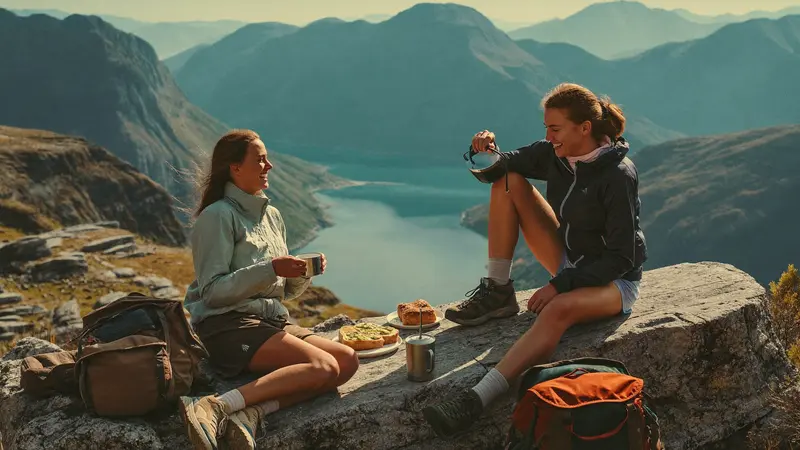
This is the biggest misunderstanding, and it causes most of the friction. The right to roam applies to people on foot — not to vehicles. A campervan is bound by ordinary parking and road law, not by allemannsretten.
What that means in practice:
- You may sleep in a legally parked vehicle in a public rest area or car park where parking isn't prohibited — but that's parking law, not a right to camp.
- You may not drive off-road or park on farmland, meadows or private tracks.
- Never block a passing place on a single-track road. This is the complaint locals raise most, and it can obstruct emergency vehicles.
- No awnings, chairs, tables or grey-water dumping in a public car park — that's camping, not parking, and it's where goodwill collapses.
- Empty toilet and grey-water tanks at proper facilities only. Campsites and service points exist for this.
If you want the full campsite setup — hook-up, awning out, chairs on the grass — use a campsite. They're inexpensive, and cabins (hytter) at the same sites are excellent value; see our budget accommodation guide.
The one that surprises everyone: campervans and tents are exempt from Norway's new visitor tax, while hotels, guesthouses, short-term rentals and cruise passengers pay it. It's a deliberate nod to the self-sufficient outdoor tradition — which is also a strong hint about the behaviour Norway expects in return. See our tourist tax guide.
The unglamorous part: human waste
It has become a genuine problem at popular trailheads and viewpoints, to the point that Lofoten distributes disposable toilet bags to visitors. The rules:
- Use facilities where they exist — trailhead car parks, campsites, cafés.
- If there are none: go at least 50 metres from water and trails, dig down where you can, and pack out all paper and hygiene products.
- Carry toilet bags in busy areas like Lofoten and the big trailheads. They weigh nothing.
- Never leave paper under a rock. It doesn't decompose in an Arctic summer, and the next visitor finds it.
Leave-no-trace essentials
As an Amazon Associate, Ritzyme earns from qualifying purchases — at no extra cost to you. We only list gear we’d pack ourselves.
Hiking safety: the other half of respecting the mountains
The same overconfidence that produces litter produces rescue callouts. Norway's famous hikes are photogenic and genuinely serious — Trolltunga is 20 km with 1,000 m of ascent and no phone signal for most of it.
- Check the forecast the morning you go, not the week before. Norwegian mountain weather turns fast.
- Boots, layers and a shell — see the summer packing list. Trainers on a mountain route is the classic mistake.
- Water, food, headlamp, power bank. There's nothing on the trail.
- Start early. Almost every incident involves someone who started too late.
- Know your turnaround time — a fixed hour at which you head back regardless of how close the summit is. Turning back is a skill, not a failure.
- Tell someone your plan if you're going alone.
- Emergency number: 112. Mountain rescue is real, professional, and something you should never need.
Difficulty ratings for every major trail are in our hiking guide, and the Preikestolen guide covers the most-attempted one.
The safety kit that stays in your pack
As an Amazon Associate, Ritzyme earns from qualifying purchases — at no extra cost to you. We only list gear we’d pack ourselves.
When to take a guide instead
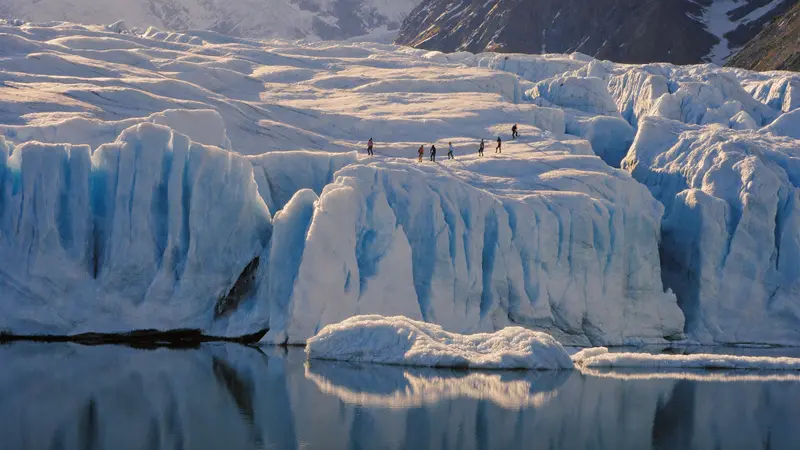
Some terrain is not a self-guided proposition, and pretending otherwise is how people get hurt: glaciers (crevasses are invisible under snow), Trolltunga outside the summer window, and any winter mountain route. A guided trip costs a fraction of what a rescue does, and you'll learn the terrain properly.
When a guide is the right call
Stavanger: Preikestolen Hike with a Local Guide
Hike Pulpit Rock with a local guide handling the transport, timing and pacing — ideal if it's your first Norwegian mountain.
Odda: Trolltunga Via Ferrata & Sky Ladder
Reach the Troll's Tongue the spectacular way — a full-day via ferrata with a sky ladder up the cliff face, harnessed and guided.
Best Fjord Tours from Bergen
Browse the top-rated fjord tours leaving straight from Bergen — the cruises and day trips worth your one big fjord day in Norway.
Heads up: booking through the links above supports Ritzyme at no extra cost to you. Prices and availability are set by the provider — always confirm details on the booking page.
Why this matters more in 2026 than it used to
Norway's honeypots are carrying visitor numbers their infrastructure was never built for — village car parks, single-track roads and trailheads without plumbing. The visitor tax exists to fund exactly this: toilets, parking, trail maintenance, signage. Every traveller who parks properly, packs out their waste and stays off the fields is the reason the right to roam still exists in a form this generous.
It's a genuinely rare privilege. Use it, and leave it intact for whoever walks up behind you. More on the cultural expectations in our Norwegian etiquette guide.
Frequently asked questions
Is wild camping legal in Norway?
Yes, on uncultivated land (utmark) under allemannsretten, the right to roam. You must pitch at least 150 metres from any inhabited house or cabin, stay no more than two nights in one spot without the landowner's permission, keep off cultivated fields and gardens, and leave absolutely no trace.
Can you sleep in a campervan anywhere in Norway?
No. The right to roam applies to people on foot, not vehicles. A campervan follows ordinary parking law, so you may sleep in a legally parked vehicle where parking isn't prohibited, but you may not drive off-road, park on farmland, block passing places, or set out chairs, awnings and grey water in a public car park.
Can you light a campfire in Norway?
Not in or near woodland between 15 April and 15 September, when a general open-fire ban applies. Outside that window and away from forest, fires are permitted with care. Use established fire rings where they exist and never leave a fire unattended.
Where do you go to the toilet when wild camping in Norway?
Use facilities wherever they exist — trailhead car parks, campsites, cafés. Where there are none, go at least 50 metres from water and trails, dig down where possible, and pack out all paper and hygiene products. In busy areas like Lofoten, carry disposable toilet bags; they weigh almost nothing.
Do campervans pay Norway's tourist tax?
No. Campervans, tents and recreational boats are exempt from the visitor tax, which applies to hotels, guesthouses, short-term rentals and cruise passengers. The exemption is a deliberate nod to Norway's self-sufficient outdoor tradition.
Ritzyme is reader-supported. Some links in this guide are affiliate links (marked as sponsored) — if you book through them we may earn a small commission at no extra cost to you. We only recommend experiences we’d take ourselves, and commissions never change our rankings.